[drupal-devel] Securing Login: MD5 password hashing using javascript

NOTE: This is a copy of http://drupal.org/node/36793 where you can find the patch i'm talking about Hello everybody. Drupal sends login password using plain text wich makes really easy password sniffing. (ever tried ethereal in an hub connected lan???) It is possible to secure sending of password using md5 hashes on the client side using javascript. A good example and explaination of this could be found at http://pajhome.org.uk/crypt/md5/auth.html here some demo: http://pajhome.org.uk/crypt/md5/chaplogin.html The patch attached is a first attempt in changing login procedure to let user browser do the md5 password hasing before send it. While an attacker can still use it for logging in to the drupal site this prevents to reuse the password on other sistems where the user has an account. A more advanced usage of this technique is implementing a "challenge response" system as described in http://pajhome.org.uk/crypt/md5/auth.html Yahoo! Mail Italia use this. Also Yahoo! Mail International seems use it. This patch is only for demostration. Fabio Varesano

It's easy to hack even if it is encrypted with md5 with javascript. The best way would be to use https... But, I must aggree that it's better than nothing... But there is one issue... If the user dont use javascript? There should be a noscript tag that allows the user to authenticate without javascript (and let the server knows that the authentication is plain). Maybe it could be introduced by a module or something that can be easily turned on and off... - Luis Sergio Moura On 11/8/05, Fabio Varesano <fabio.varesano@gmail.com> wrote:
NOTE: This is a copy of http://drupal.org/node/36793 where you can find the patch i'm talking about
Hello everybody.
Drupal sends login password using plain text wich makes really easy password sniffing. (ever tried ethereal in an hub connected lan???)
It is possible to secure sending of password using md5 hashes on the client side using javascript.
A good example and explaination of this could be found at http://pajhome.org.uk/crypt/md5/auth.html here some demo: http://pajhome.org.uk/crypt/md5/chaplogin.html
The patch attached is a first attempt in changing login procedure to let user browser do the md5 password hasing before send it.
While an attacker can still use it for logging in to the drupal site this prevents to reuse the password on other sistems where the user has an account.
A more advanced usage of this technique is implementing a "challenge response" system as described in http://pajhome.org.uk/crypt/md5/auth.html
Yahoo! Mail Italia use this. Also Yahoo! Mail International seems use it.
This patch is only for demostration.
Fabio Varesano

Hello, Why should sending the password hashed increase security? Just get the hashed password and provide that to the script (of course not by entering it in the password field but by "faking" the HTTP POST values). The only way to protect the password is using SSL or TLS. Regards, Konstantin 2005/11/8, Sergio <lsmoura@gmail.com>:
It's easy to hack even if it is encrypted with md5 with javascript. The best way would be to use https... But, I must aggree that it's better than nothing... But there is one issue... If the user dont use javascript? There should be a noscript tag that allows the user to authenticate without javascript (and let the server knows that the authentication is plain). Maybe it could be introduced by a module or something that can be easily turned on and off...
- Luis Sergio Moura
On 11/8/05, Fabio Varesano <fabio.varesano@gmail.com> wrote:
NOTE: This is a copy of http://drupal.org/node/36793 where you can find the patch i'm talking about
Hello everybody.
Drupal sends login password using plain text wich makes really easy password sniffing. (ever tried ethereal in an hub connected lan???)
It is possible to secure sending of password using md5 hashes on the client side using javascript.
A good example and explaination of this could be found at http://pajhome.org.uk/crypt/md5/auth.html here some demo: http://pajhome.org.uk/crypt/md5/chaplogin.html
The patch attached is a first attempt in changing login procedure to let user browser do the md5 password hasing before send it.
While an attacker can still use it for logging in to the drupal site this prevents to reuse the password on other sistems where the user has an account.
A more advanced usage of this technique is implementing a "challenge response" system as described in http://pajhome.org.uk/crypt/md5/auth.html
Yahoo! Mail Italia use this. Also Yahoo! Mail International seems use it.
This patch is only for demostration.
Fabio Varesano

Konstantin Käfer wrote:
Hello,
Why should sending the password hashed increase security? Just get the hashed password and provide that to the script (of course not by entering it in the password field but by "faking" the HTTP POST values).
the opriginal post already covered this. see below.
While an attacker can still use it for logging in to the drupal site this prevents to reuse the password on other sistems where the user has an account.

It is possible to secure sending of password using md5 hashes on the client side using javascript.
A good example and explaination of this could be found at http://pajhome.org.uk/crypt/md5/auth.html
Have you tested it with charset cases? Does JS show same MD5 value in UTF-8 as in ISO-X-Y charsets? It could result in a crash test... I think that JS hashing gives more problems than benefits. May be a virtual keyboard to avoid keyloggers... -- Rafa Couto (caligari) mailto:rafacouto @gmail.com Linux user #99126 (http://counter.li.org)

On 10 Nov 2005, at 5:47 PM, Rafa Couto wrote:
It is possible to secure sending of password using md5 hashes on the client side using javascript.
A good example and explaination of this could be found at http://pajhome.org.uk/crypt/md5/auth.html
Have you tested it with charset cases? Does JS show same MD5 value in UTF-8 as in ISO-X-Y charsets? It could result in a crash test...
I think that JS hashing gives more problems than benefits. May be a virtual keyboard to avoid keyloggers... Yeah. that would be cool.
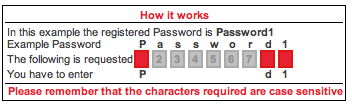
Something my bank does as well, is have me set up a password, and it only asks me <x> random characters out of how many ever letters it is. This is an extra password, over and above the account pin number. They also have a keypad for typing in the account number / pin, on the page before this. -- Adrian Rossouw Drupal developer and Bryght Guy http://drupal.org | http://bryght.com
participants (6)
-
 Adrian Rossouw
 -
 Fabio Varesano
 -
 Konstantin Käfer
 -
 Moshe Weitzman
 -
 Rafa Couto
 -
 Sergio